
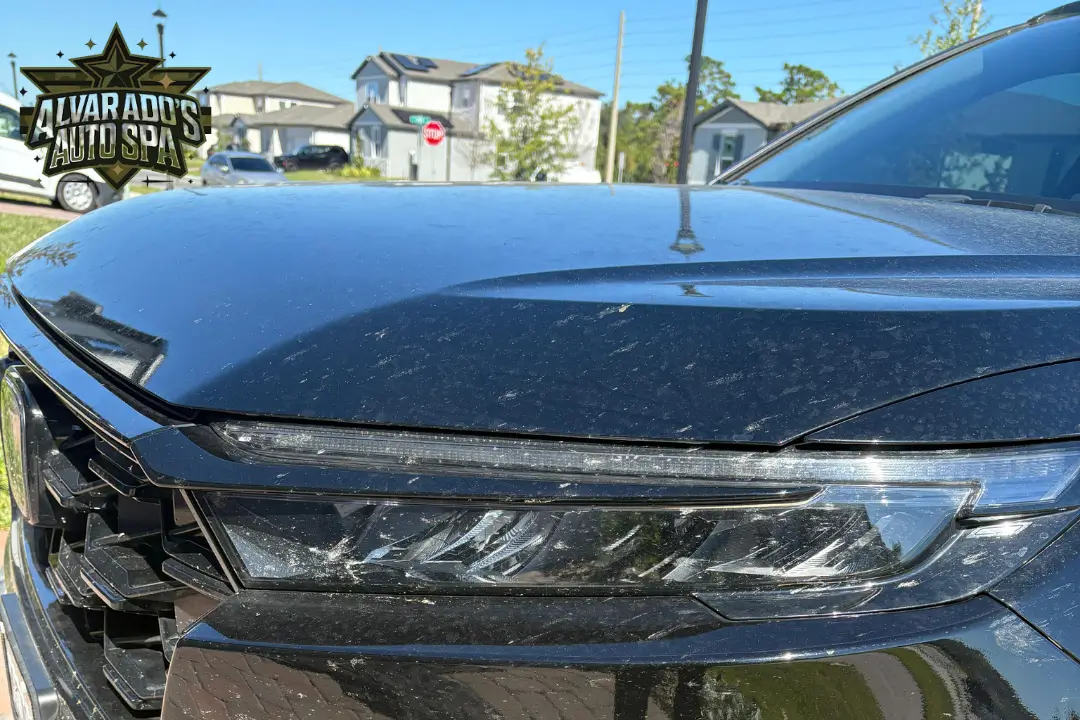
We have seen many vehicle owners believe that ceramic coating can completely stop water spots. But it’s not true!
Ceramic coating does add a strong layer of protection and makes the surface easier to clean. But it does not make your paint fully immune to rainwater, sprinkler water, or hard water minerals.
We see at least 3-4 cases monthly since we started our business in 2022. So, we know one thing: the coating helps protect against many things, but it may not prevent water spots.
In Florida, this issue is even more common due to the heat, humidity, frequent rainfall, and hard water. That’s why you need to take better care of your car. How is that? Let’s give you a closer idea.
Types of Water Spots on Ceramic-Coated Cars
Here are the main types of water spots we usually see on ceramic-coated vehicles.
1. Mineral Deposit Water Spots
These spots usually look like white, chalky, or cloudy rings. On darker cars, they are much easier to see, especially under direct sunlight or shop lighting.
Mineral deposits form when hard water, rainwater, or sprinkler water dries on the vehicle and leaves minerals behind. In Florida, this can happen fast because the sun and heat dry the water before you get a chance to wipe it off.
Once the water evaporates, minerals like calcium and magnesium remain on the ceramic coating.
This mark is the most annoying mark for me. Because it doesn’t come off easily.
So, I usually start with a proper wash, fully dry the surface, and then use a ceramic-safe water-spot remover. If the minerals have not been sitting too long, this type of spot can usually be removed without harming the coating.
2. Etched Water Spots
This is the type we take more seriously because it means the spot has gone beyond the surface. These spots usually look dull, stained, or faded. Sometimes they still have the shape of a water droplet, but they do not go away after a normal ceramic wash.
Etched water spots happen when minerals, acid rain, bird droppings, or other acidic contamination sit on the vehicle for too long.
So, when the Florida sun bakes those deposits into the surface, they can start eating into the coating or clear coat. At that point, it is no longer just a surface stain.
A basic water spot remover may not be enough for this mark
If the mark has already etched into the surface, the area may need light machine polishing. After polishing, that panel may also need the ceramic coating reapplied, as polishing can reduce or remove it in that area.
This is why I always tell customers not to let water spots sit for weeks, especially during hot weather.
3. Bonded Film Water Spots
Bonded film usually looks cloudy, smeared, hazy, or dull across a section of the vehicle. It may not look like round water spots. Sometimes it just makes the paint look dirty or flat.
Bonded film happens when water minerals mix with road grime, pollen, dust, oils, soap residue, or other contamination. It creates a dull layer on top of the coating. This can make the ceramic coating appear weak, even when it’s still there.
We normally do a deeper wash and surface decontamination first to remove this spot.
Then we inspect the paint again and use a ceramic-safe water spot remover if needed. Once the bonded film is removed, the gloss, slickness, and water behavior usually come back.
How We Tell the Difference
When a ceramic-coated vehicle comes into our shop with water spots, we do not treat all spots the same way. We look at how the spot appears, how the surface feels, and whether the mark changes after washing.
From my experience, the sooner you treat water spots, the easier they are to remove. Ceramic coating provides strong protection for your vehicle, but it still requires proper washing, drying, and maintenance to keep the surface clean and glossy.
Best Ways To Prevent Water Spots on Ceramic Coating
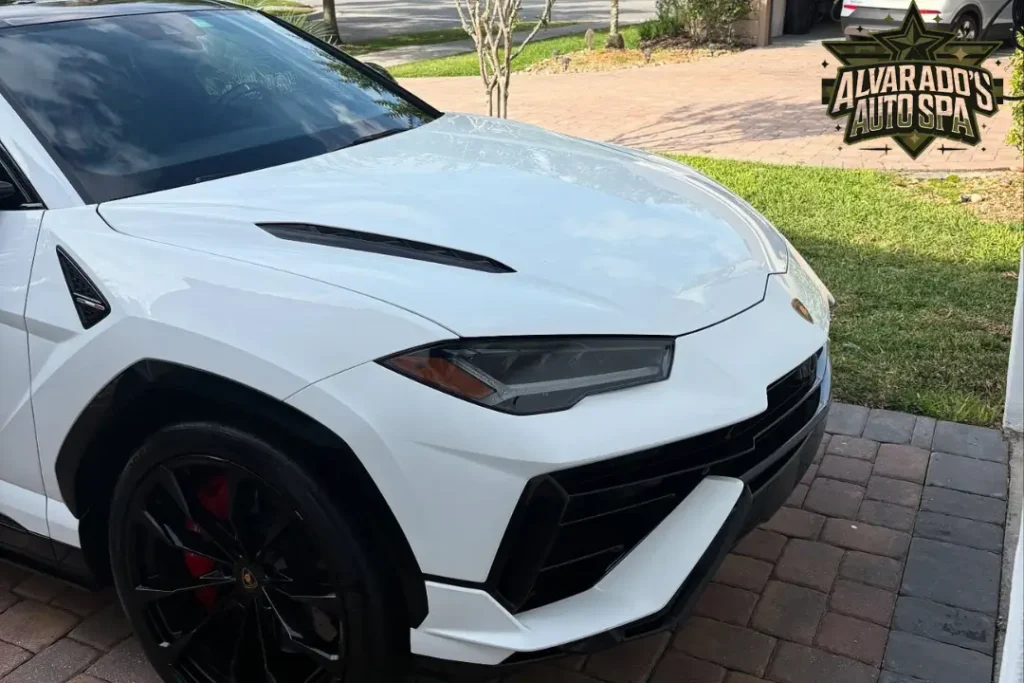
You can prevent water spots on ceramic-coated cars by following these steps:
1. Dry the Vehicle Immediately After Washing
One of the simplest and most effective ways to prevent water spots is to dry your car right after washing it. When water is left to air-dry, minerals can settle on the surface and create visible marks, even on ceramic-coated paint.
Using a soft microfiber towel helps remove water safely without scratching the surface.
It also reduces the chance of streaks and mineral buildup, especially in hot climates like Florida, where water evaporates quickly.
2. Avoid Washing in Direct Sunlight
Washing your car in direct sunlight increases the risk of water spots because the heat dries the water too quickly. When this happens, minerals do not rinse off properly. It will leave them behind on the paint.
It’s better to wash your car in a shaded area or during cooler parts of the day so the surface stays wet long enough for proper cleaning and rinsing.
3. Use pH-Neutral Car Shampoo
A pH-neutral car shampoo is gentle on ceramic coatings and helps maintain the protective layer without breaking it down. Harsh soaps can strip away protective coatings over time, making the surface more prone to contamination.
Using the right shampoo also supports a consistent maintenance wash routine, keeping the coating effective for longer and reducing the risk of water spots.
4. Use Spot-Free or Deionized Water
Using spot-free or deionized water is one of the best ways to reduce mineral deposits on your vehicle. Since these water types contain fewer minerals, they are much less likely to leave behind stains after drying.
This method is especially useful for coated car maintenance because it helps preserve the hydrophobic effect and keeps the paint looking clean and glossy without extra polishing or correction work.
Drying Methods For Ceramic Coated Cars
A good remover should be strong enough to dissolve hard water stains but still safe for coated surfaces. So, you don’t lose the hydrophobic effect or gloss.
Here are some of the best options to remove water spots:
- pH-balanced water spot removers
- Spray-on detailing cleaners
- Diluted vinegar solution (light cases only)
- Professional-grade detailing products
- Paint correction service (for heavy etching)
In most cases, the key is to act early. Fresh water spots are much easier to remove from ceramic coating than old, baked-on mineral stains.
Why Do Water Spots Appear After Ceramic Coating?
After completing hundreds of detailing jobs, I have seen cases where the coating was still in good condition, but water spots had formed. It mainly occurs due to poor drying, hard water, or Florida weather.
I notice a watermark happening because:
- Hard water drying on the surface
- Sprinkler water is hitting the vehicle
- Rainwater sitting too long
- Washing in direct sunlight
- Letting the vehicle air-dry
- Lack of proper maintenance
So, if you notice water spots after ceramic coating, it does not always mean the coating has failed. In many cases, the coating is still working, but minerals or contamination are sitting on the surface and need to be removed the right way.
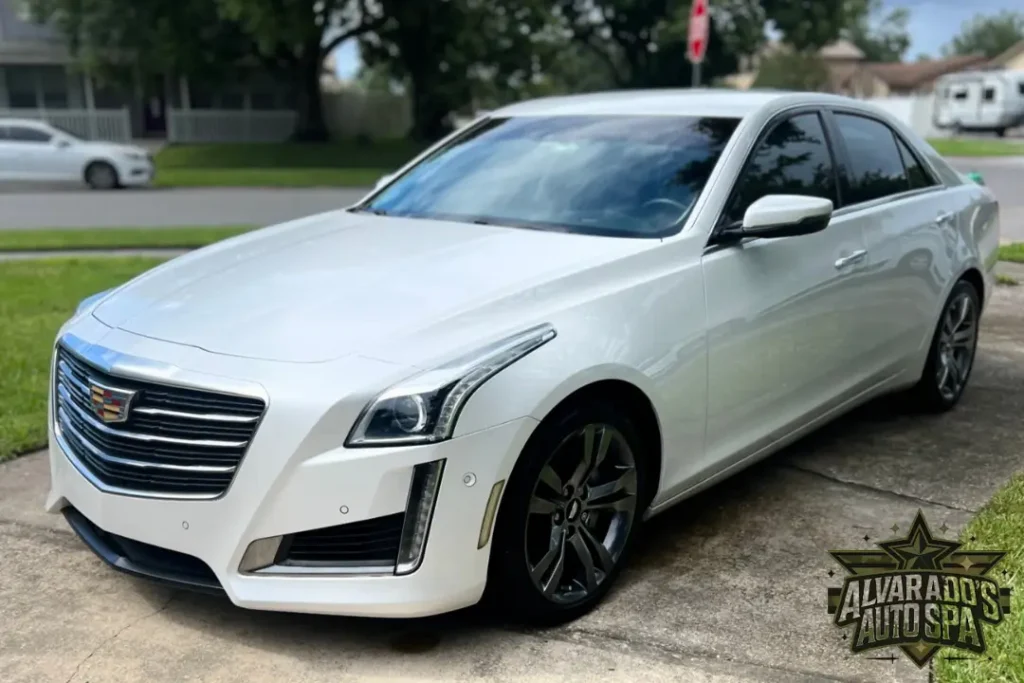
Are Water Spots Permanent on Ceramic Coating?
Water spots are not always permanent on ceramic coating. If the spots are fresh and only sitting on top of the coating, they can usually be removed with a proper wash and a ceramic-safe water spot remover.
But I also saw them become permanent when they sit too long.
Hard water minerals, sprinkler water, rain residue, and Florida heat can cause those spots to bond to the coating. In worse cases, they can etch into the coating or clear coat, which may require polishing and reapplying protection to that area.
We had a client bring in a ceramic-coated vehicle with heavy spotting on the hood and roof a few weeks ago.
At first, it looked like normal water spots. But after washing and inspecting the paint, we noticed some marks were not coming off. Then we have to do a full water spot removal process.
That is why we always recommend treating water spots early before they turn into real surface damage.
Can Water Spots Damage Ceramic Coating?
It can damage ceramic coating if they are left on the surface too long. The biggest issue is not the water itself. It is what the water leaves behind after it dries.
Water spots can damage ceramic coating when:
- Hard water mineral buildup
- Sun-baked water spots
- Sprinkler mineral buildup
- Rain residue staining
- Surface etching
That is why we always recommend washing and drying the vehicle properly, especially after rain, sprinkler exposure, or hard water contact.
How Do We Remove Water Spots From Ceramic Coating?
Here is how we fix the ceramic coating water spots:
Step 1: Start With a Full Wash
We wash the vehicle to remove dirt, dust, and surface grime. This helps us clearly see the water spots and prevents scratches during removal. We always use a pH-neutral shampoo to protect the ceramic coating.
Step 2: Dry the Vehicle Completely
Next, we dry the entire surface using clean microfiber towels. This step is important because it allows us to work directly on the water spots without spreading water or residue across the paint. We make sure no moisture is left behind on panels like the hood, roof, and mirrors.
Step 3: Apply a Safe Water Spot Remover
We then apply a ceramic-safe water spot remover to the affected areas. This product helps break down mineral deposits that have bonded to the surface.
We let it sit briefly, then gently wipe it away with soft microfiber towels, making sure not to apply heavy pressure.
Step 4: Treat Any Remaining Spots
If some spots are still visible, we repeat the process carefully. We avoid aggressive scrubbing because it can affect the coating finish. For more stubborn water spots, we may use a stronger detailing solution depending on the condition of the surface.
Step 5: Rinse and Inspect the Paint
After treatment, we lightly rinse the vehicle and dry it again. Then we inspect the surface under proper lighting to ensure all water spots are removed, and the gloss is restored.
Step 6: Finish With Maintenance Protection
To complete the process, we may apply a ceramic maintenance spray to boost the hydrophobic effect and restore shine. This helps the surface stay cleaner for longer and reduces the chance of new water spots forming quickly.
Final Thoughts
Ceramic coating protects your paint, but it does not make your vehicle water-spot proof. In Florida, hard water, rain, sprinklers, and heat can still leave mineral marks on the coating.
I have found that around 70% of early water spot issues can be corrected without major paint correction when they are treated on time. The problem gets harder when spots sit for weeks or months and start bonding or etching into the surface.
The best way to protect your coating is simple: wash properly, dry the vehicle after water exposure, and remove water spots early before they turn into permanent damage.
Frequently Asked Questions
Does ceramic coating make water spots worse?
No, ceramic coating does not make water spots worse. It actually reduces the strength of water’s adhesion to the surface. However, if water is left to dry, minerals can still form spots on top of the coating.
Why do water spots show up more on dark-colored cars?
Water spots are easier to see on dark paint because the contrast is higher. Even light mineral residue becomes more visible on black, dark blue, or gray vehicles, especially under sunlight.
Can I use vinegar to remove water spots from ceramic coating?
Light vinegar solutions can sometimes help with mild water spots, but they should be used carefully. Strong or repeated use can affect the coating’s performance, so it’s not the best long-term solution.
What happens if I ignore water spots for too long?
If water spots are left untreated, they can harden and bond to the surface. Over time, this may lead to etching, dull paint, and the need for polishing or paint correction to fully restore the finish.
Are automatic car washes bad for ceramic coatings?
Not always, but some automatic car washes use harsh chemicals or hard water that can increase water spotting. Touchless washes are usually safer, but proper hand washing is still the best option.
How can I reduce water spots after washing my car?
The best way is to dry the car immediately after rinsing, avoid washing in direct sunlight, and use a microfiber towel or blower. This prevents minerals from drying on the surface.
Do ceramic coatings protect against hard water damage?
Yes, ceramic coatings provide some protection by making the surface slick and easier to clean. However, they do not completely prevent hard water from leaving mineral deposits if left to dry.